
IRIS provides a way to see around corners, inside buildings, and down tunnels without exposing troops to direct fire.
By Hezy Laing
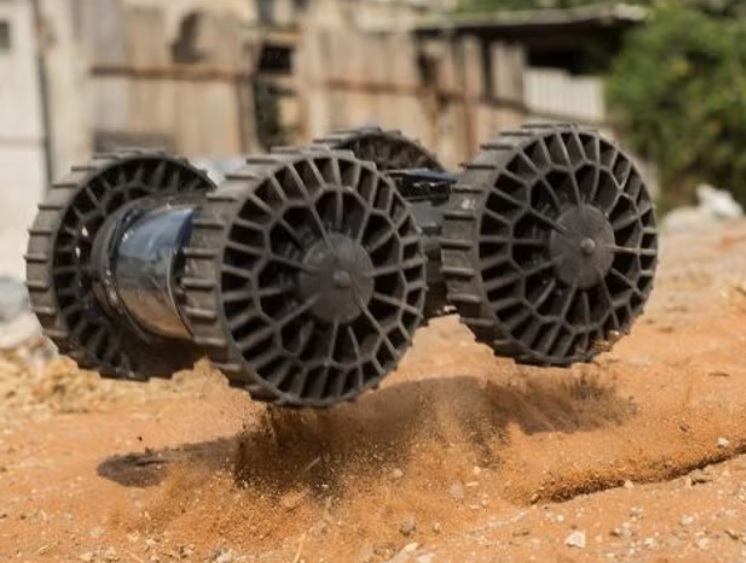
The Israeli-made IRIS reconnaissance robot has rapidly emerged as one of the most important new tools in modern infantry operations, offering soldiers a lightweight, durable, and highly mobile platform for real‑time situational awareness.
Developed by Roboteam, an Israeli defense‑technology company known for compact battlefield robotics, IRIS weighs roughly 1.2 kilograms, making it one of the lightest tactical robots in active military service.
Its small size allows it to be carried by a single soldier and deployed within seconds during urban combat, tunnel exploration, or close‑quarters engagements.
The need for such a system became clear during recent conflicts in dense urban environments, where soldiers frequently face ambushes, hidden fighters, and booby‑trapped structures.
IRIS provides a way to see around corners, inside buildings, and down tunnels without exposing troops to direct fire.
Equipped with day and night cameras, two‑way audio, and a ruggedized chassis capable of surviving drops from several meters, the robot can transmit live video back to operators even in GPS‑denied environments.
Its battery supports up to four hours of continuous operation, and its quiet electric motor allows it to move discreetly through rubble, stairwells, and narrow passageways.
Compared with similar systems such as the American Throwbot XT or the British Dragon Runner, IRIS stands out for its combination of ultra‑light weight, high‑resolution sensors, and durability.
While the Throwbot is lighter, IRIS offers superior imaging and longer operational endurance.
The Dragon Runner, though more heavily armored, is significantly larger and less suited for rapid infantry deployment.
IRIS is also relatively affordable, with unit costs estimated between $8,000 and $12,000 depending on configuration, making it accessible for widespread use across infantry platoons.
IRIS is currently fielded by the IDF, U.S. Special Operations units, and several NATO‑aligned militaries seeking compact reconnaissance tools for urban warfare.
Despite its advanced capabilities, IRIS is not autonomous; it is fully remote‑controlled by a soldier using a handheld console with encrypted communications.
This ensures human oversight in complex environments while avoiding the ethical and operational challenges associated with autonomous targeting.
As modern battlefields grow more unpredictable, IRIS has become a critical asset, giving soldiers the ability to gather intelligence, map threats, and make informed decisions before stepping into danger.
Its combination of portability, resilience, and real‑time awareness is reshaping how infantry units operate in some of the world’s most challenging combat zones.